Health and Safety Audit Services
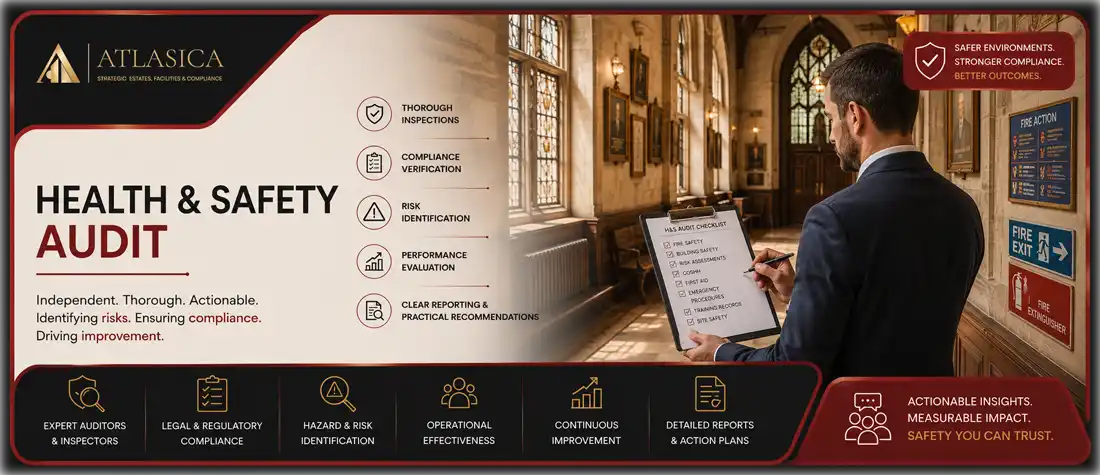
Health and Safety Audit Services
Independent Insight. Stronger Compliance. Safer Organisations.
An effective health and safety management system should do more than demonstrate that policies, procedures and risk assessments exist. It should provide clear responsibilities, effective risk controls, competent decision-making and reliable assurance that health and safety arrangements are being implemented throughout the organisation.
A Health and Safety Audit provides an independent and structured assessment of how effectively an organisation manages its health and safety responsibilities.
At Atlasica®, our Health and Safety Audit service examines both documented arrangements and operational practice. We assess whether appropriate systems are in place, whether responsibilities are understood, whether identified controls are being implemented and whether the organisation can demonstrate effective monitoring and continuous improvement.
Our audits are designed to identify strengths, areas of concern, potential compliance gaps and opportunities to improve health and safety performance.
The outcome is a clear, evidence-based report supported by practical recommendations and a prioritised action plan.
What Is a Health and Safety Audit?
A Health and Safety Audit is a systematic and independent examination of an organisation’s health and safety management arrangements.
Unlike a routine workplace inspection, which generally focuses on visible hazards and site conditions at a particular point in time, an audit considers the wider systems used to identify, manage, monitor and review health and safety risks.
The audit may examine:
- Leadership and organisational commitment
- Health and safety policies
- Roles, responsibilities and accountability
- Risk management arrangements
- Employee competence and training
- Consultation and communication
- Workplace conditions
- Operational safety procedures
- Building-related health and safety arrangements
- Contractor management
- Accident and incident management
- Emergency preparedness
- Monitoring and inspection processes
- Record keeping and compliance evidence
- Management review arrangements
- Organisational culture and behaviours
- Continuous improvement
The purpose of the audit is not simply to identify whether documents are available. It is to understand whether the organisation’s health and safety arrangements are appropriate, implemented and capable of managing risk effectively.
Beyond Policies and Checklists
An organisation may have an extensive collection of policies, procedures and risk assessments while still experiencing weaknesses in day-to-day health and safety management.
Documents alone do not demonstrate that risks are being controlled.
Effective health and safety management depends on how different organisational factors work together, including:
- The buildings, workplaces and assets being managed
- The activities and services carried out
- The hazards associated with those activities
- The employees, contractors, visitors and other people who may be affected
- The availability and competence of responsible personnel
- The clarity of roles and responsibilities
- The effectiveness of communication and consultation
- The resources available to manage identified risks
- The quality of leadership oversight
- The organisation’s culture and attitude towards health and safety
- The effectiveness of monitoring, reporting and corrective action
Our audit approach considers these relationships to provide a more meaningful assessment of how health and safety operates across the organisation.
Why Should Your Organisation Invest in a Health and Safety Audit?
Health and safety weaknesses are not always immediately visible.
Gaps may develop gradually as buildings change, services expand, employees leave, responsibilities are reassigned, contractors are appointed or operational pressures increase.
Without effective monitoring, an organisation may believe that suitable arrangements remain in place when important controls are no longer operating as intended.
A Health and Safety Audit can help your organisation to:
- Identify potential legal and compliance gaps
- Recognise unmanaged or insufficiently controlled risks
- Assess whether policies and procedures remain appropriate
- Evaluate how effectively health and safety arrangements are implemented
- Identify inconsistencies between documented procedures and working practices
- Review the effectiveness of leadership and management oversight
- Clarify responsibilities and accountability
- Assess employee competence and training arrangements
- Improve the management of contractors
- Strengthen accident and incident management
- Identify weaknesses before they contribute to harm or operational disruption
- Prioritise resources according to risk
- Provide senior leaders with independent assurance
- Support continuous improvement
An independent audit can also provide valuable evidence to leadership teams, trustees, governors, directors and other stakeholders that health and safety arrangements are being reviewed and actively managed.
What Does the Atlasica® Health and Safety Audit Include?
The scope of each audit is tailored to the organisation’s size, activities, buildings, risk profile and operational requirements.
Depending on the agreed scope, the audit may include the following areas.
Health and Safety Leadership and Governance
Leadership plays an essential role in establishing expectations, allocating resources and creating accountability.
The audit may review:
- Leadership commitment to health and safety
- Governance and oversight arrangements
- Health and safety objectives
- Organisational responsibilities
- Management accountability
- Allocation of resources
- Health and safety reporting arrangements
- Leadership review meetings
- Performance monitoring
- Escalation of significant risks
- Evidence of leadership involvement
We consider whether senior leaders receive sufficient information to understand the organisation’s health and safety position and make informed decisions.
Health and Safety Policy
The organisation’s Health and Safety Policy should reflect its activities, structure and risk profile.
The audit may assess:
- Whether an appropriate policy is in place
- The policy’s statement of intent
- Organisational responsibilities
- Arrangements for managing health and safety
- Approval and authorisation
- Communication and accessibility
- Review arrangements
- Alignment with operational practice
Where gaps are identified, recommendations may be provided to strengthen the policy and improve its practical application.
Roles, Responsibilities and Accountability
Health and safety responsibilities should be clearly defined, communicated and understood.
The audit may examine:
- Organisational responsibilities
- Leadership responsibilities
- Management responsibilities
- Employee responsibilities
- Competent health and safety support
- Delegated duties
- Responsibility for building compliance
- Contractor-management responsibilities
- Reporting and escalation arrangements
- Accountability for completing corrective actions
We consider whether responsibilities are appropriately allocated and whether individuals have sufficient authority, competence, time and resources to fulfil them.
Risk Assessment and Risk Management
Risk assessments should identify significant hazards, evaluate risk and establish appropriate control measures.
The audit may review:
- Risk assessment procedures
- General workplace risk assessments
- Activity and task-specific assessments
- Site-specific assessments
- Assessment quality and consistency
- Identification of affected persons
- Existing control measures
- Additional actions
- Action ownership
- Review arrangements
- Communication of findings
- Evidence that controls are implemented
The audit may also consider whether risk assessments reflect current activities and workplace conditions.
Health and Safety Arrangements and Procedures
The audit may review arrangements relevant to the organisation’s activities, including:
- Workplace safety
- Slips, trips and falls
- Manual handling
- Working at height
- Work equipment
- Electrical safety
- Hazardous substances
- Personal protective equipment
- Lone working
- Display screen equipment
- Occupational driving
- Employee welfare
- Stress and wellbeing arrangements
- New and expectant mothers
- Young persons
- Visitors and members of the public
- Higher-risk activities
The areas assessed will depend on the organisation’s operating environment and risk profile.
Workplace Conditions and Site Inspection
A physical inspection may be carried out to assess workplace conditions and observe how health and safety arrangements operate in practice.
The inspection may consider:
- Access and circulation routes
- Housekeeping
- Storage arrangements
- Floors, stairs and walkways
- Lighting
- Ventilation
- Workplace temperature
- Welfare facilities
- Safety signage
- Machinery and work equipment
- Electrical equipment
- Hazardous substances
- Personal protective equipment
- Working-at-height arrangements
- Emergency exits
- Fire safety conditions
- Unsafe conditions or working practices
Observations may be supported by photographs where appropriate and agreed.
Training, Competence and Awareness
Employees should have the knowledge, skills, experience and information required to carry out their responsibilities safely.
The audit may assess:
- Health and safety induction
- Mandatory training arrangements
- Role-specific training
- Training records
- Refresher training
- Competency requirements
- Professional qualifications
- Toolbox talks and safety briefings
- Manager awareness
- Employee understanding of responsibilities
- Evaluation of training effectiveness
We consider whether training arrangements are appropriate for the organisation’s activities and identified risks.
Employee Consultation and Communication
Effective communication helps employees understand risks, raise concerns and contribute to safer working practices.
The audit may review:
- Health and safety communication arrangements
- Employee consultation
- Safety meetings
- Health and safety committees
- Employee representation
- Reporting of hazards and concerns
- Communication of risk assessments
- Safety briefings
- Access to relevant information
- Feedback and escalation processes
The audit may also consider whether employees feel able to report concerns and whether those concerns are addressed appropriately.
Accident, Incident and Near-Miss Management
Accident and incident information can provide valuable insight into the effectiveness of existing controls.
The audit may assess:
- Accident-reporting procedures
- Accident records
- Near-miss reporting
- Incident investigation
- Identification of immediate and underlying causes
- Corrective and preventive actions
- Review of relevant risk assessments
- Management oversight
- Communication of lessons learned
- Trend analysis
- Statutory reporting arrangements, where applicable
We consider whether incidents are used as opportunities for organisational learning and improvement.
Contractor Health and Safety Management
Organisations retain important responsibilities when appointing and managing contractors.
The audit may examine:
- Contractor selection
- Pre-qualification arrangements
- Competence checks
- Insurance and supporting documentation
- Contractor induction
- Risk assessments and method statements
- Site rules
- Permit-to-work arrangements
- Coordination and communication
- Monitoring and supervision
- Contractor performance
- Management of higher-risk activities
- Contractor incidents and non-conformances
The audit considers whether contractor risks are effectively managed throughout the contractor lifecycle.
Emergency Preparedness and Response
Organisations should have appropriate arrangements for foreseeable emergencies.
The audit may review:
- Emergency procedures
- Fire and evacuation arrangements
- Emergency responsibilities
- First-aid provision
- Emergency contact information
- Communication arrangements
- Emergency equipment
- Business continuity considerations
- Emergency drills and exercises
- Post-drill reviews
- Arrangements for people requiring additional assistance
The audit considers whether emergency arrangements are documented, communicated, tested and reviewed.
Monitoring, Inspection and Continuous Improvement
Effective organisations monitor health and safety performance rather than relying only on reactive information.
The audit may assess:
- Workplace inspections
- Compliance checks
- Internal monitoring
- Performance indicators
- Accident and near-miss trends
- Completion of corrective actions
- Management reporting
- Leadership review
- Audit arrangements
- Lessons learned
- Continuous improvement processes
We consider whether monitoring provides meaningful assurance and whether findings lead to effective action.
Health and Safety Culture
Policies and procedures are more effective when supported by positive leadership, open communication and consistent behaviours.
The audit may consider indicators of organisational culture, including:
- Leadership visibility and commitment
- Management attitudes towards health and safety
- Employee engagement
- Willingness to report concerns
- Response to reported hazards
- Communication between teams
- Accountability for unsafe practices
- Resistance to change
- Operational pressures
- Consistency between organisational expectations and workplace behaviours
- Confidence in health and safety arrangements
The purpose is not to assess individuals in isolation but to understand whether organisational behaviours support or weaken effective risk management.
Our Health and Safety Audit Process
Our audit process is designed to provide a structured, transparent and evidence-based assessment.
1. Initial Consultation and Scope
We begin by discussing your organisation, buildings, activities, existing arrangements and reasons for requesting the audit.
The audit scope is agreed in advance and may be tailored to specific sites, services, departments or areas of concern.
2. Pre-Audit Information Review
Relevant documents may be requested before the site visit.
These may include:
- Health and Safety Policy
- Organisational responsibilities
- Risk assessments
- Health and safety procedures
- Training records
- Accident and incident information
- Inspection records
- Contractor documentation
- Health and safety meeting records
- Previous audit reports
- Existing action plans
This helps establish an understanding of the organisation’s documented arrangements.
3. On-Site Assessment
The on-site audit may include:
- Discussions with relevant leaders and managers
- Interviews with responsible personnel
- Review of records and compliance evidence
- Observation of workplace activities
- Inspection of relevant work areas
- Review of operational practices
- Sampling of health and safety arrangements
The audit uses a sampling approach and focuses on obtaining sufficient evidence to evaluate the agreed scope.
4. Analysis and Evaluation
Audit evidence is reviewed to identify:
- Areas of effective practice
- Opportunities for improvement
- Documentation gaps
- Implementation gaps
- Potential compliance concerns
- Significant or emerging risks
- Weaknesses in monitoring or accountability
Findings are evaluated according to their significance and potential impact.
5. Audit Report
Following the audit, your organisation will receive a structured report.
Depending on the agreed scope, the report may include:
- Executive summary
- Overall audit findings
- Areas of good practice
- Audit observations
- Identified gaps
- Risk-rated findings
- Supporting evidence
- Photographic observations, where appropriate
- Practical recommendations
- Prioritised action plan
The report is designed to support both leadership oversight and practical implementation.
6. Findings Review
A post-audit meeting may be provided to explain the findings, discuss priorities and answer questions.
This can help ensure that responsible managers understand the recommendations and the reasons behind them.
7. Improvement Support
Where required, Atlasica® can provide additional consultancy support to assist with:
- Updating policies and procedures
- Developing risk assessments
- Creating action plans
- Clarifying responsibilities
- Improving monitoring arrangements
- Developing compliance schedules
- Supporting management teams
- Implementing corrective actions
- Reviewing progress
Audit and improvement support can be commissioned separately to preserve clarity between independent assessment and implementation assistance.
Clear and Prioritised Audit Findings
Not every audit finding presents the same level of risk.
Where appropriate, findings may be prioritised according to their significance, urgency and potential impact.
The audit report may distinguish between:
Critical or Immediate Priority
A significant concern that may require urgent attention due to the potential for serious harm, significant control failure or substantial compliance risk.
High Priority
A material weakness that should be addressed promptly to strengthen risk control and reduce exposure.
Medium Priority
An area where existing arrangements may require improvement to support consistency, effectiveness or stronger compliance.
Low Priority or Opportunity for Improvement
An enhancement that may strengthen existing arrangements, improve efficiency or support good practice.
Prioritisation helps leadership teams allocate responsibilities, resources and timescales according to risk.
Who Can Benefit from a Health and Safety Audit?
Our Health and Safety Audit service can be tailored to organisations of different sizes and across a range of sectors, including:
- Schools, colleges and academy trusts
- Charities and community organisations
- Hospitality and leisure venues
- Commercial offices
- Healthcare and care environments
- Property and facilities management organisations
- Residential and mixed-use developments
- Retail organisations
- Small and medium-sized businesses
- Multi-site organisations
Audits can be adapted to individual buildings, multiple sites, departments, operational services or organisation-wide management systems.
When Should an Organisation Consider a Health and Safety Audit?
A Health and Safety Audit may be beneficial:
- As part of a scheduled assurance programme
- Before or following significant organisational change
- Following changes in leadership or management responsibilities
- When acquiring or occupying new premises
- Following an accident, incident or near miss
- Where health and safety performance has declined
- When responsibilities are unclear
- Where existing documentation may be outdated
- Before introducing new activities, equipment or services
- Following concerns raised by employees or stakeholders
- Following regulatory inspection or enforcement
- During organisational growth or restructuring
- Before appointing a new health and safety provider
- When independent assurance is required
- When leadership requires a clearer understanding of organisational risk
Organisations do not need to wait for an incident or compliance concern before commissioning an audit. Proactive auditing can help identify weaknesses while there is still an opportunity to address them in a planned and proportionate way.
Why Choose Atlasica®?
Atlasica® combines health and safety knowledge with practical experience in facilities management, building operations, compliance, contractor management and organisational improvement.
This enables us to consider how health and safety interacts with:
- Buildings and workplace conditions
- Mechanical and electrical assets
- Statutory compliance activities
- Employees and contractors
- Operational services
- Management responsibilities
- Organisational resources
- Leadership and governance
- Workplace culture
Our approach is:
Independent
We provide an objective assessment based on the evidence available within the agreed audit scope.
Practical
Recommendations are designed to support realistic and sustainable improvement.
Proportionate
Findings are considered in relation to the organisation’s activities, operating environment and level of risk.
Evidence-Based
Conclusions are informed by documentation, records, observations and discussions with relevant personnel.
Risk-Focused
We help organisations distinguish significant concerns from lower-priority improvements.
Constructive
Our audits recognise effective practice while identifying opportunities to strengthen existing arrangements.
Improvement-Oriented
The purpose is not simply to identify shortcomings but to provide a practical route towards stronger health and safety performance.
More Than an Audit Report
An audit report should not become another document stored and forgotten.
The greatest value is achieved when findings are understood, responsibilities are assigned, actions are prioritised and improvements are monitored through to completion.
Our aim is to provide your organisation with a clearer understanding of:
- What is working effectively
- Where risks or weaknesses may exist
- Which actions should receive priority
- What evidence may be required
- How existing arrangements can be strengthened
- How progress can be monitored over time
The result is a practical foundation for informed decision-making and continuous improvement.
Strengthen Your Health and Safety Arrangements
Whether your organisation requires independent assurance, a review of existing systems or a clearer understanding of its health and safety priorities, Atlasica® can provide a structured and proportionate audit tailored to your operating environment.
Arrange a Health and Safety Audit
Contact Atlasica® to discuss your organisation, audit requirements and preferred scope.
Together, we can help identify strengths, address potential gaps and create a clearer path towards safer workplaces, stronger compliance and more effective health and safety management..